How the Visa Network Works
How the Visa Network Works
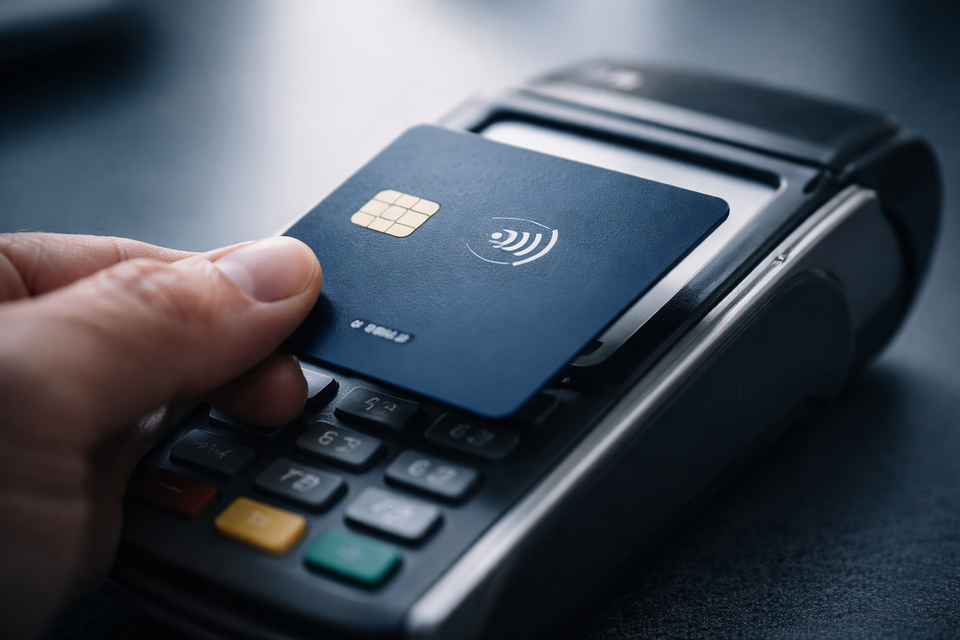
Every time you tap your Visa card at a coffee shop, a remarkable sequence of events unfolds in under two seconds. Multiple institutions exchange messages, funds are routed, risk is assessed, and authorization is granted — all before the receipt prints. Understanding how this works requires understanding what Visa actually is, and what it is not.
What Visa Actually Is
Visa is not a bank. It does not issue credit cards, hold deposits, or lend money. What Visa operates is a payment network — a global messaging and settlement infrastructure that connects banks, merchants, and cardholders.
This distinction matters enormously. When your Visa card is declined, Visa itself usually isn't the one declining it — your issuing bank is. When your card is stolen and you get a refund, that comes from your bank, not Visa. Visa's role is to ensure the message gets where it needs to go, reliably and securely.
The Four-Party Model
The Visa network operates on a four-party model — four distinct participants in every transaction:
| Party | Who They Are | Role |
|---|---|---|
| Cardholder | You | Initiates the transaction by presenting the card |
| Issuer | Your bank (e.g. Chase, Bank of America) | Issued your card, approves or declines the transaction |
| Merchant | The store or business | Accepts the card payment |
| Acquirer | Merchant's bank (e.g. Fiserv, Chase Merchant Services) | Processes payments on behalf of the merchant |
Visa sits in the middle of this model — not as a participant in the financial transaction, but as the network that connects the issuer and acquirer.
How a Transaction Flows
Here is what happens in the roughly 1.5 seconds between tap and approval:
The Visa four-party authorization flow — from card tap to approval in under 2 seconds.
What VisaNet Actually Does
VisaNet is Visa's proprietary global network — the technical backbone that processes over 200 billion transactions per year. It performs three core functions:
1. Authorization
When you tap your card, VisaNet routes the authorization request from the acquirer to the correct issuing bank in real time. It identifies the issuer from the first six digits of your card number (the Bank Identification Number, or BIN), routes the message, and returns the response — all in milliseconds.
2. Clearing
Authorization confirms the transaction but doesn't move money. Clearing is the process of submitting the final transaction data — after the sale is complete — for settlement. Merchants typically batch and submit their transactions at end of day. VisaNet processes these clearing files and calculates the net positions between issuers and acquirers.
3. Settlement
Settlement is when money actually moves. Visa operates a settlement service that nets out the positions calculated during clearing and instructs banks to transfer funds accordingly. For most US transactions, settlement occurs within one to two business days.
How Visa Makes Money
Visa charges fees for using its network. These fall into two main categories:
Service fees
Charged to issuers and acquirers as a percentage of transaction volume processed over VisaNet. These are Visa's primary revenue source.
Data processing fees
Charged per transaction for the authorization, clearing, and settlement services Visa provides.
Visa does not set or receive interchange fees — a common misconception. Interchange is paid by the acquirer to the issuer as compensation for the risk and cost of extending credit. Visa sets the interchange rate schedules that govern what issuers can charge, but the money flows between banks — not to Visa.
Understanding Interchange
Interchange is the fee the merchant's bank (acquirer) pays to the cardholder's bank (issuer) on every transaction. It is typically expressed as a percentage plus a fixed amount — for example, 1.80% + $0.10.
| Card Type | Typical US Interchange Rate |
|---|---|
| Visa debit (regulated) | 0.05% + $0.21 |
| Visa credit (rewards) | 1.50% – 2.40% |
| Visa credit (premium rewards) | 2.10% – 2.70% |
| Visa corporate card | 2.50% – 2.95% |
Interchange rates vary by card type, merchant category, transaction method (card present vs card not present), and whether the card is consumer or commercial. Visa publishes its full interchange rate tables publicly — they run to dozens of pages.
Visa vs the Banks — Who Does What
| Function | Visa | Issuing Bank | Acquiring Bank |
|---|---|---|---|
| Issues the card | ✓ | ||
| Sets credit limit | ✓ | ||
| Approves transactions | ✓ | ||
| Routes authorization | ✓ | ||
| Processes merchant payments | ✓ | ||
| Sets network rules | ✓ | ||
| Handles fraud disputes | Rules only | ✓ | ✓ |
Why Two Seconds Feels Instant
The speed of a Visa transaction is a feat of engineering. VisaNet processes an average of 65,000 transactions per second at peak, with a network uptime target of 99.9999% — roughly 30 seconds of downtime per year. Authorization messages travel across Visa's private network infrastructure spanning multiple continents, with redundant data centers ensuring no single point of failure.
For a cross-border transaction — say, an American using their Chase Visa card at a merchant in Tokyo — the authorization request travels from Japan to the US and back in under two seconds, crossing multiple network hops, currency conversions, and fraud checks along the way.
The Bottom Line
Visa is a network business, not a banking business. Its value lies in the ubiquity and reliability of its infrastructure — 80 million merchant locations, 15,000 financial institution clients, and 4.2 billion cards in circulation globally. Every tap, swipe, and online checkout that runs on Visa is a message traveling through VisaNet — authorized, cleared, and settled by a system purpose-built to make money move invisibly and instantly.
Next up: how Mastercard's network compares — and where the two diverge.
Clear explanations of banking and payments concepts — written for people who work with financial systems.



Member discussion