How Zelle Works
How Zelle Works
Zelle moves more money than Venmo and Cash App combined. In 2023 alone, Americans sent over $800 billion through Zelle — yet most users have only a vague idea of how it actually works. Unlike Venmo, there's no Zelle balance to top up. Unlike a wire transfer, the money arrives in minutes. And unlike a card network, there's no merchant, no acquirer, and no interchange fee. So what exactly is Zelle, and how does it move money so fast?
What Zelle Is
Zelle is a bank-owned peer-to-peer payment network operated by Early Warning Services — a company jointly owned by seven of the largest US banks: Bank of America, Capital One, JPMorgan Chase, PNC, Truist, US Bank, and Wells Fargo.
Zelle is embedded directly into the mobile banking apps of over 2,200 US banks and credit unions. For most users it isn't a separate app — it's a feature inside their existing bank app. This is deliberate: Zelle's competitive advantage is that it lives where your money already is.
What Makes Zelle Different
To understand Zelle you need to contrast it with the two other common ways Americans move money between people:
| Feature | Zelle | Venmo / Cash App | ACH Transfer |
|---|---|---|---|
| Speed | Minutes | Instant (with fee) or 1–3 days | 1–3 business days |
| Where money lives | Directly in bank account | In-app balance first | Directly in bank account |
| Fee to send | None | None (standard) / fee for instant | None (standard) |
| Reversible? | No — by design | Partially | Limited reversal window |
| Owned by | Major US banks | PayPal / Block Inc. | Federal Reserve / The Clearing House |
| Requires app? | No — built into bank app | Yes — separate app | No |
How Zelle Actually Moves Money
This is where Zelle gets interesting — and where most explanations stop short. Zelle doesn't move money the way most people assume.
The short answer
Zelle transactions are settled using the RTP network (Real-Time Payments) operated by The Clearing House, or in some cases via a same-day ACH mechanism. The "instant" experience Zelle provides is real — but it's built on top of existing payment infrastructure, not a new one.
The longer answer
When you send $100 to a friend via Zelle:
- Zelle's platform (Early Warning Services) validates both parties — confirming the recipient's phone number or email is enrolled and linked to a bank account
- A payment message is sent from your bank to the recipient's bank via the RTP network or same-day ACH
- The recipient's bank credits their account — typically within minutes
- Your bank debits your account
- No money sits in a Zelle float account — it moves directly between bank accounts
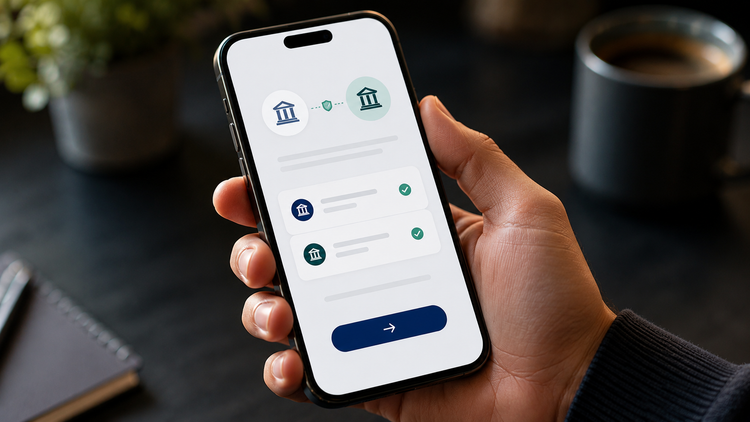
Zelle routes payments through Early Warning Services and settles via RTP or same-day ACH — directly between bank accounts.
The Role of Early Warning Services
Early Warning Services (EWS) is the company that operates Zelle. Its core function in a Zelle transaction is acting as a directory and routing service — not a money transmitter.
When you enroll in Zelle with your phone number or email address, EWS stores the mapping between your contact information and your bank account. When someone sends you money, EWS looks up which bank account is associated with your phone number and tells the sender's bank where to route the payment.
EWS never holds the funds. The money moves directly from one bank account to another — EWS just handles the address book.
Why Zelle Is Instant
The speed of Zelle comes from its use of the RTP network — The Clearing House's real-time payment infrastructure that operates 24/7/365 and settles transactions in seconds with finality. Unlike ACH, which batches transactions and settles on a delayed basis, RTP settles each payment individually and immediately.
Not all Zelle transactions use RTP — some smaller banks that haven't yet connected to RTP use same-day ACH instead, which is why some Zelle payments take a few hours rather than seconds. But for the major banks, RTP is what makes the "minutes" promise possible.
Why Zelle Payments Are Irreversible
This is the feature that generates the most consumer confusion — and the most fraud losses. Zelle payments are final upon sending. There is no undo button, no 24-hour reversal window, and no dispute process for authorized transactions.
The only transactions Zelle will reverse are those that were genuinely unauthorized — meaning someone gained access to your account and sent money without your knowledge. Scam payments, where you were deceived into sending money voluntarily, are treated differently and recovery is not guaranteed.
How Zelle Fits Into the Bank's Business
Zelle is free to use — no transaction fees for senders or recipients. So why do banks offer it?
- Retention — embedding payments into the bank app increases daily engagement and reduces the likelihood customers will switch banks
- Competitive defense — Zelle was built explicitly to counter Venmo and Cash App, which were pulling users away from traditional banking apps
- Float — while Zelle itself holds no float, banks benefit from customers keeping higher balances in checking accounts to fund Zelle payments rather than maintaining Venmo balances
- Data — transaction data from Zelle provides banks with detailed spending behavior insights
Zelle vs Venmo vs Wire — When to Use What
| Use case | Best option | Why |
|---|---|---|
| Splitting a dinner bill | Zelle or Venmo | Free, fast, easy |
| Paying rent to a landlord | Zelle or ACH | Direct to bank, no fees |
| Paying a contractor | ACH or check | Reversibility if dispute arises |
| Sending money internationally | Wire or specialist service | Zelle is US-only |
| Buying from a stranger online | Credit card or escrow | Never use Zelle — no buyer protection |
The Bottom Line
Zelle is a bank-owned directory and routing layer built on top of the RTP network and ACH infrastructure. It moves money faster than traditional transfers because it uses real-time settlement rails — and it's free because banks subsidize it as a retention and competitive tool. Its irreversibility is both its core design feature and its primary consumer risk. Understanding what Zelle is — and crucially what it is not — is essential for anyone working with retail banking products, payment systems, or consumer financial services.
Clear explanations of banking and payments concepts — written for people who work with financial systems.



Member discussion